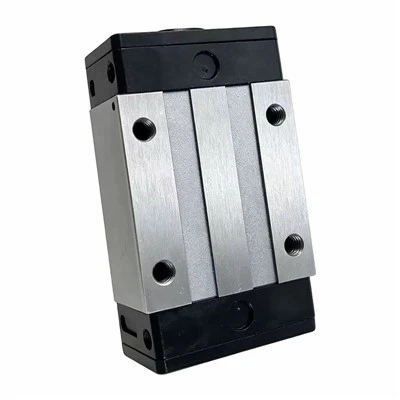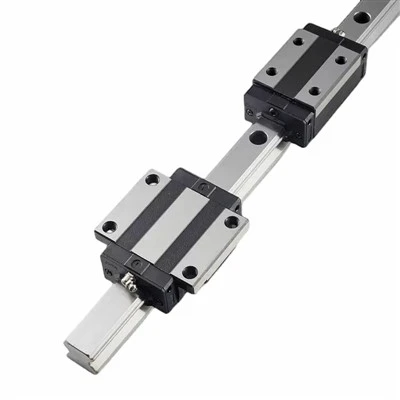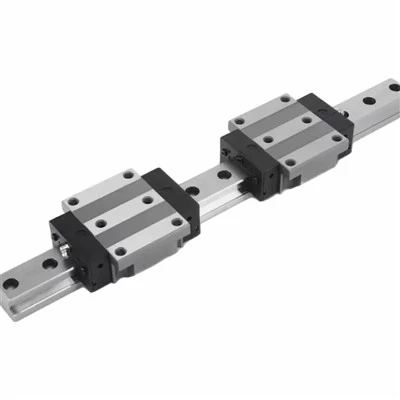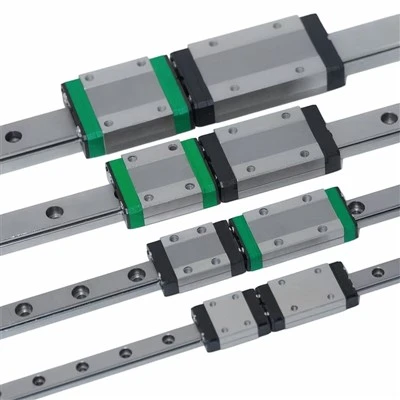
The operating principle of a curved guide rail relies on the rail's geometry and the object's motion characteristics to facilitate movement. This process can be divided into four stages: The guiding stage, where the object moves along a curved path guided by the rail; the load-bearing stage, where the rail and slider support the load and transmit forces through a combination of rolling and sliding friction; the buffering stage, where shock and vibration are attenuated by damping mechanisms; and the positioning stage, where a positioning device locks the object at the target location.
The operation of curved guide rails is primarily based on the principles of rolling and sliding friction. To ensure the object moves stably along the rail, support components-such as guide rollers or sliders-are typically installed on the inner side of the rail.