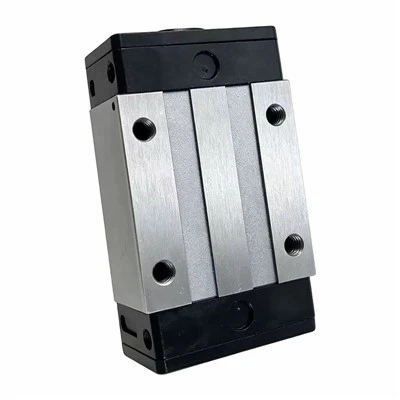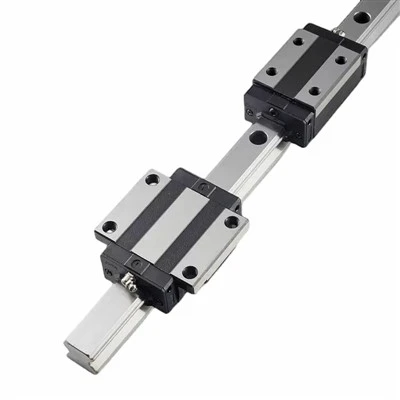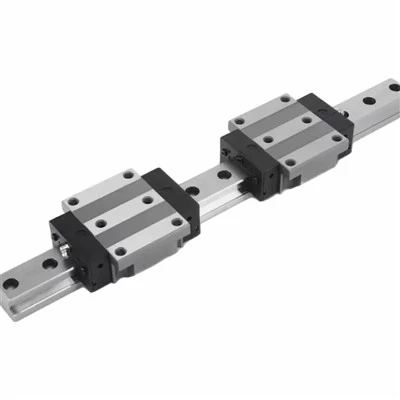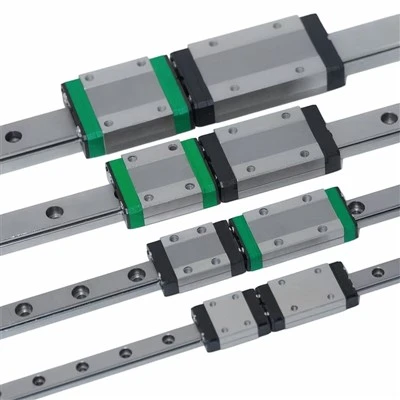
Rolling guideways utilize rolling elements-such as balls, rollers, or needle rollers-placed between the guideway surfaces to convert sliding friction into rolling friction.
By incorporating R-shaped grooves with a curvature matching the ball diameter, the contact between the rolling surface and the balls shifts from point contact to near-surface contact, thereby enhancing load-bearing capacity.
To meet the demands of high-speed and high-precision applications, current rolling guideway technology is evolving toward increased load capacity, rigidity, and precision, as well as extended maintenance-free service intervals.