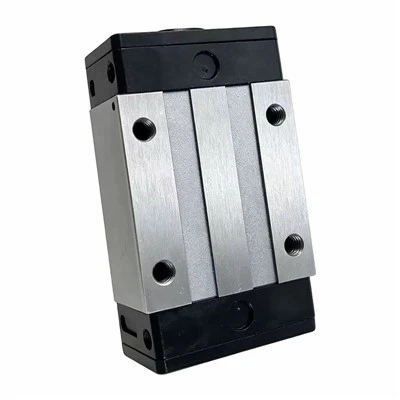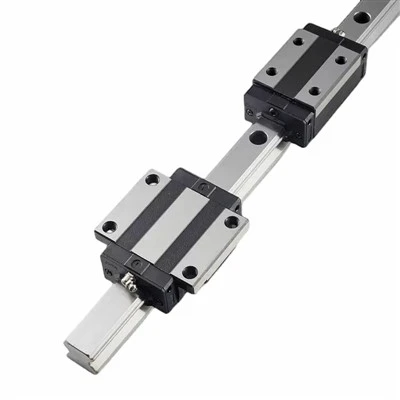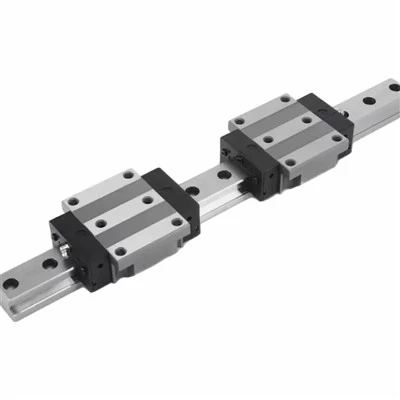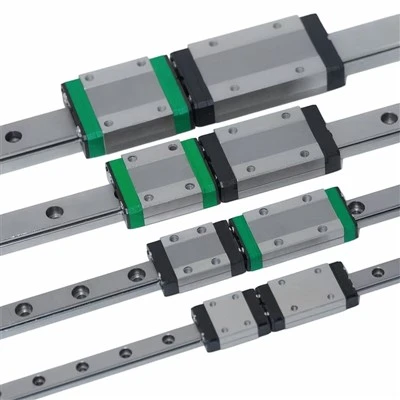
In mechatronic systems, the guiding mechanism typically consists of guideways, which are composed of a moving element and a supporting/guiding element. During the operation of various machines, the guideway assembly ensures the correct motion trajectory of the actuating element; it also influences the motion characteristics of that element.
As a guiding mechanism, a guideway should possess the following characteristics:
Guiding accuracy: This primarily refers to the precision of the guideway's motion trajectory. Key factors influencing guiding accuracy include the geometric and contact accuracy of the guideway, its structural configuration, the stiffness and thermal deformation of the guideway and its supporting components, and-in the case of hydrostatic (or hydrodynamic) guideways-the oil film thickness and stiffness.
Accuracy retention: This is primarily determined by the guideway's wear resistance. Wear resistance depends on factors such as the guideway material, the frictional characteristics of the guideway assembly, and the contact pressure and its distribution.
Stiffness: This encompasses both the inherent stiffness of the guideway itself and the contact stiffness. It depends largely on factors such as the guideway's shape and dimensions, the method of connection to supporting components, and the loading conditions.
Low-speed motion stability: When the moving guideway undergoes low-speed motion or minute displacements, it is prone to friction-induced self-excited vibration, known as "stick-slip" (or "creeping"). Stick-slip can reduce positioning accuracy or increase the surface roughness of the workpiece being machined.